Sigma Mixer Guide: How Z-Blade Kneaders Work for Pastes and Doughs
· PerMix Team
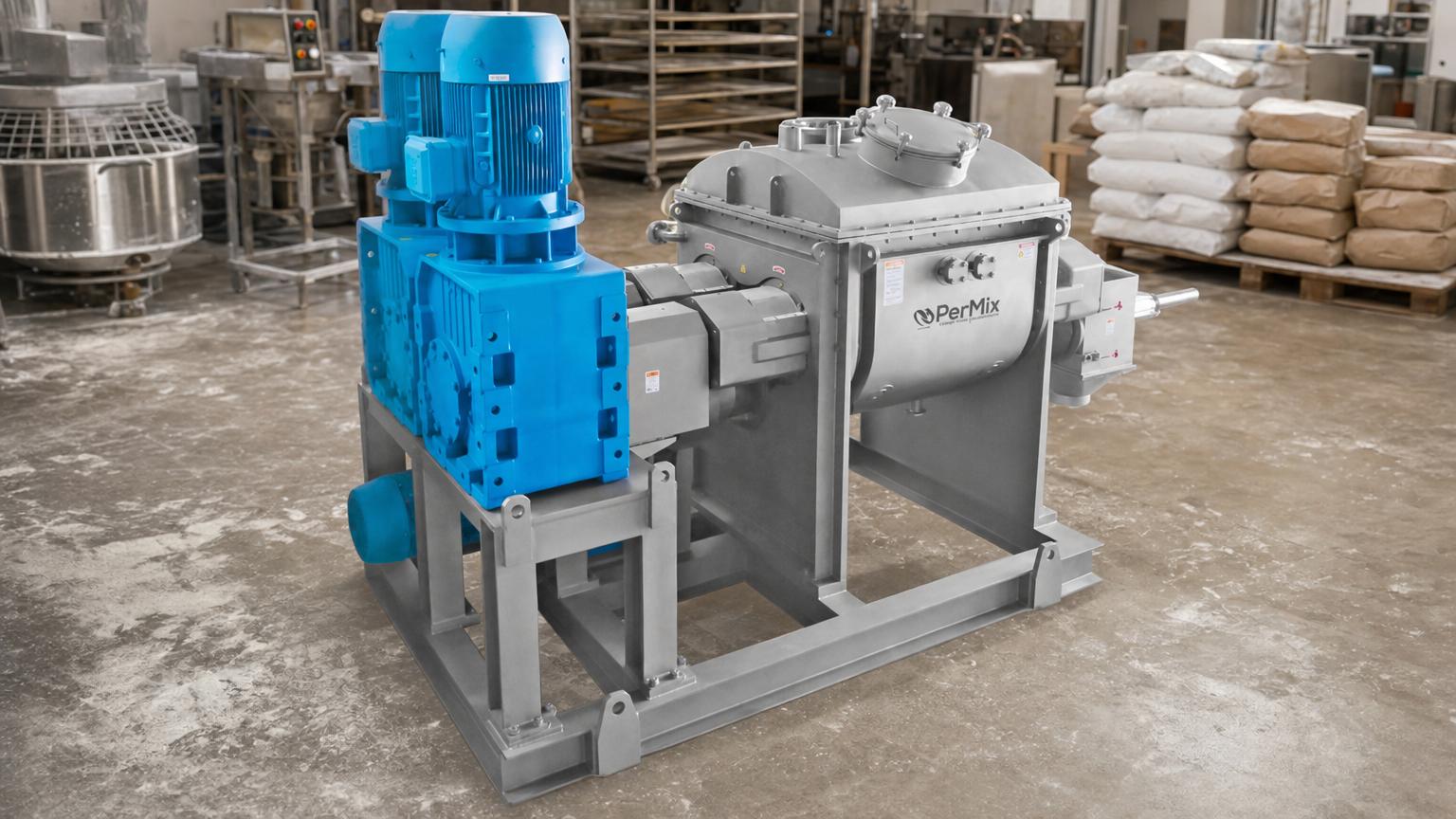
A sigma mixer (also called a sigma blade mixer or Z blade mixer) uses two counter-rotating sigma-shaped arms in a trough to knead high-viscosity pastes, doughs, and stiff compounds. This guide covers working principle, duty fit, and real PerMix product links.
A sigma mixer — also known as a sigma blade mixer or Z blade mixer — is a batch kneader for high-viscosity pastes, doughs, adhesives, and similarly stiff compounds. Twin sigma-shaped (Z-shaped) arms turn in a trough so material is pulled, folded, and sheared between the blades and the bowl wall. This is a selection and working-principle guide, not a case study.
Product example: PerMix Sigma Mixer.
What a sigma mixer does
In a classic sigma blade arrangement, two horizontal shafts carry interlocking sigma (Z) arms that rotate toward each other (or in a designed differential). Product is repeatedly drawn into the apex between blades, stretched, and wiped along the trough. That motion builds:
- Intensive kneading for stiff pastes and dough-like rheology
- Dispersion of powders into viscous binders when energy and residence time are adequate
- Homogeneous batches where ribbon or tumble blenders cannot develop enough torque or fold action
- Optional jacketed heat transfer for temperature-sensitive compounds
Sigma / Z blade mixers are process kneaders — not construction paddle mixers for mortar on a jobsite, and not light dry-powder tumble blenders.
How a sigma blade mixer works
Working principle centers on laminar shear and folding in a high-viscosity regime:
1. Charge liquids/binders and solids in the sequence your recipe requires (often binder first, then solids). 2. Start blades at a controlled speed; torque rises as viscosity builds. 3. Material is kneaded between sigma arms and against the trough; scrapers or close clearances reduce wall residue when specified. 4. Run to a timed endpoint or rheology/torque target. 5. Discharge via tilt, extruder screw (on extruder-equipped designs), or bottom outlet as configured. 6. Clean thoroughly — heels in corners and under shafts drive changeover time.
Fill level, blade-to-bowl clearance, speed, and jacket temperature all affect cycle time. Pilot recipes should record torque trends and addition order so production can reproduce the regime.
When a sigma mixer is the right tool
Specify a sigma mixer when:
- Viscosity is high enough that convective powder blenders stall or leave unmixed lumps
- The product needs kneading / folding rather than simple suspension
- Batch genealogy and recipe flexibility favor a trough kneader over continuous extrusion alone
- You are compounding adhesives, chewing-gum bases, silicone pastes, bakery doughs, BMC/SMC-style pastes, or similar stiff masses (always validate against your actual formulation)
If the duty is free-flowing dry powder with little liquid, prefer a ribbon, plow, paddle, or tumble blender instead. If vacuum deaeration or solvent recovery is central, evaluate vacuum-capable mixer designs in parallel.
Sigma mixer vs vacuum mixer and powder blenders
Use live PerMix pages when shortlisting:
- High-viscosity kneading (sigma / Z blade): PerMix Sigma Mixer
- Vacuum mixing / emulsifying duties: PerMix Vacuum Mixer
- Vacuum mixer-dryer when drying under vacuum matters: PerMix Vacuum Mixer Dryer
- Dry powder ribbon blending: PerMix Ribbon Mixer
- Cohesive powder plow duty: PerMix Plow Mixer
- Geometry selection overview: How to choose industrial mixers
A vacuum mixer targets deaeration, emulsification, or vacuum process steps; a sigma kneader targets torque-heavy paste folding. Some plants own both. Do not force a dry ribbon blender into stiff dough duty, and do not buy a heavy sigma solely for free-flowing premixes.
Practical selection checklist
Before you issue an RFQ for a sigma blade / Z blade mixer, require:
- Viscosity range, yield stress, and temperature limits for the recipe
- Batch volume vs working volume and recommended fill
- Blade geometry, clearances, speed range, and installed power / torque
- Discharge method (tilt, screw discharge, valve) and estimated residue
- Jacket / heating-cooling capability if reaction or viscosity control needs it
- Seal design for solvents or abrasive fillers
- Materials and finish for product contact
- Cleanout access and changeover expectations
Related reading on hazardous-area cleanability themes (separate published article): Easy-clean sigma mixers extruders for hazardous areas — use only as adjacent context; this guide stays on selection and working principle.
Scale-up notes
1. Hold similar fill fraction and addition order from pilot to plant. 2. Track specific energy or torque–time curves, not only clock minutes. 3. Scale clearances and wall wiping deliberately — a clean pilot bowl can hide heel problems at production scale. 4. Confirm discharge works with the stiffest state of the batch, not only the start-of-mix fluidity. 5. Align motor, gearbox, and overload protection with peak torque during solid addition.
FAQ
What is a sigma mixer?
A batch kneader with twin sigma-shaped (Z) blades in a trough, used for high-viscosity pastes and doughs.
What is a Z blade mixer?
Z blade mixer is another common name for a sigma blade mixer — the arms resemble a Z or sigma in profile.
Can a sigma mixer replace a ribbon blender?
Only if the duty is paste/kneading. For free-flowing powders, a ribbon or tumble blender is usually the better fit. See PerMix Ribbon Mixer.
Does PerMix build sigma mixers?
Yes — review the live product page: PerMix Sigma Mixer.
Next step
Share viscosity data, batch size, solvent profile, and discharge preferences with PerMix. Start from PerMix Sigma Mixer — and compare vacuum mixer pages if deaeration or vacuum process steps are part of the same line.